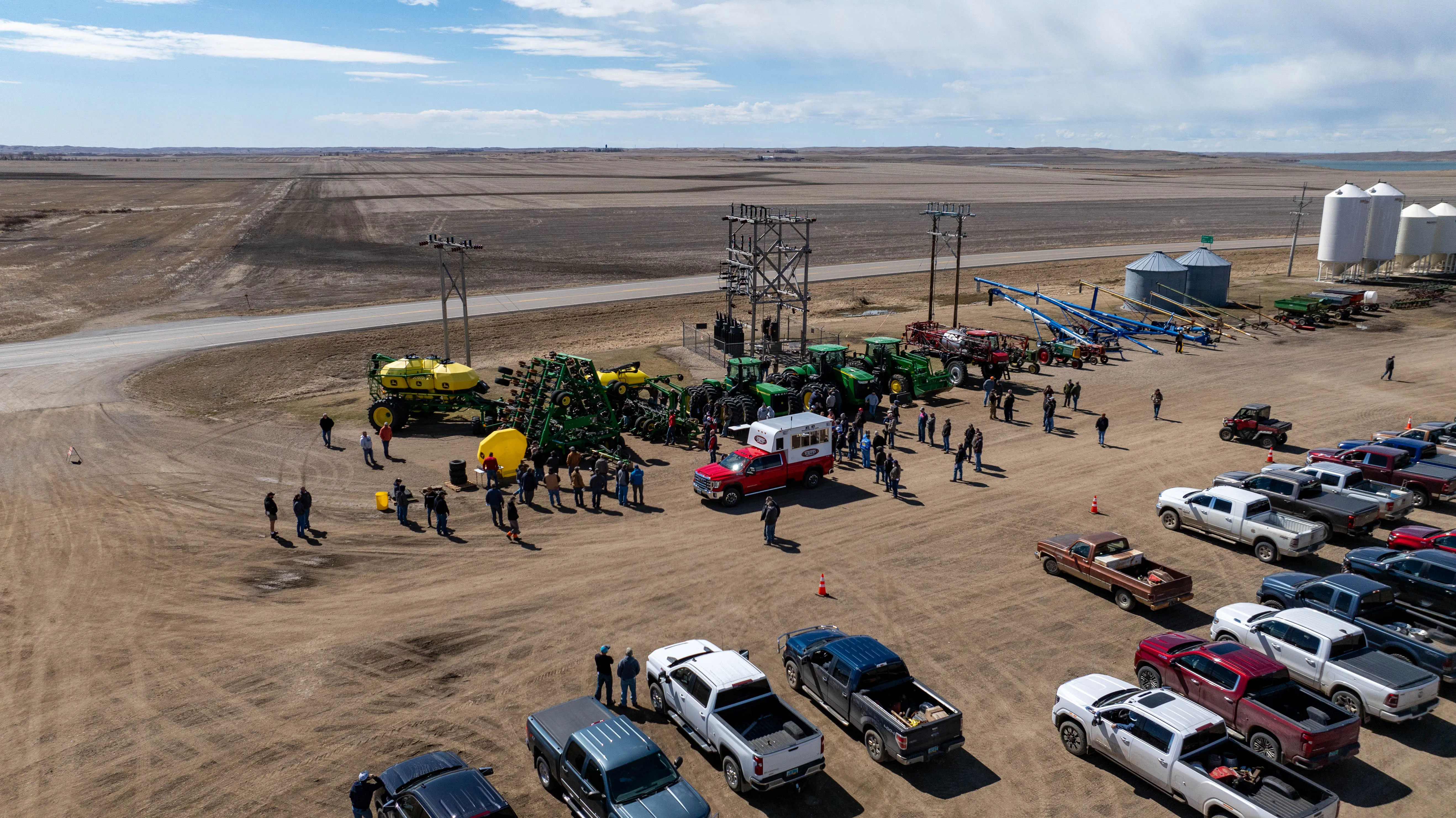
If you've been keeping an eye on auctions for a low-hour tractor, a newer combine, or a late-model planter, you've probably noticed the good ones are harder to come by. There just aren't as many coming up for sale as there were a year or two ago. That's not in your head. The market has changed, and it mostly comes down to what's been happening at dealerships and on farms over the last couple of years.
Here's what's going on, and what it means whether you're looking to buy or thinking about selling.
Why is late-model farm equipment harder to find?
Mostly because fewer farmers are buying new. Most late-model used equipment starts out as a trade-in. When fewer people trade in for something new, fewer good used machines show up for sale a year or two later.
A few other things play a part:
-
Dealers have cleared out their extra machines. When dealers had more late-model used equipment than they could sell, some of it went to auction. Much of that surplus has now moved through the market, leaving fewer clean, low-hour units to sell.
-
Farmers are hanging on to what they have. With tight margins, many farmers are getting another season or two out of their equipment instead of trading up. Those machines stay in the shed instead of coming up for sale.
•Fewer trade-ins reach the market. When farmers delay replacing equipment, fewer late-model machines become available for the next owner.
How do new-equipment purchases affect the used market?
Through August 2026, U.S. sales of new farm tractors were down about 12% from the same time the year before, while combine sales were down about 9%, according to monthly industry sales data. Big tractors saw some of the largest declines: four-wheel-drive tractor sales were down more than 24%, and two-wheel-drive tractors over 100 horsepower were down almost 16%.
Today's new machines are tomorrow's used ones. When fewer machines are sold and traded in, there are fewer late-model units available for buyers down the road.
That does not affect every type of equipment in the same way. The number of available machines can vary by make, model, size, condition, and the needs of local buyers. But when clean, low-hour equipment does come to auction, it often attracts attention.
Is there less used farm equipment for sale?
It depends on the type of machine and the market, but the supply of clean, late-model units has tightened. Fewer trade-ins entering the market and more farmers keeping equipment longer both limit the number of newer machines available at auction.
That doesn't mean prices are going up on everything. What a machine brings still depends on the make, model, hours, and condition. But buyers should not expect dealers to send the same volume of late-model equipment to auction that they did when there was more surplus equipment in the market.
What does this mean if you're looking to buy?
-
Plan ahead, and be ready to bid when the right machine comes up. With fewer good late-model units out there, waiting for the perfect one at the perfect price could mean waiting a long time.
-
Know what you want before sale day. Settle on the make, model, size, and options you need, so you're ready to go when a good one shows up.
-
Get your financing lined up. Clean, low-hour equipment doesn't sit around long. Getting pre-approved lets you bid without second-guessing.
-
Consider a few years older. A well-kept machine that's a couple of years older, with good service records, can be a smart buy when newer ones are hard to find.
-
Do your homework. Look at the hours, service records, and conditions. Go see it in person if you can, and ask questions before you bid.
-
Watch for retirement auctions. When a farmer retires, the equipment has often been run and cared for by one person for years, and there have been more of these auctions lately.
What does it mean if you own late-model equipment?
It could be a good time to sell. When fewer clean, low-hour machines are coming up for sale, the ones that do tend to get more attention from serious buyers. If you have late-model equipment you're not using much, or you're thinking about cutting back or retiring, it's worth finding out what it could bring.
When you sell, how it affects your taxes, and how you get your equipment ready all make a difference. We cover all of that in Thinking About Selling Equipment? Why Fall Is a Smart Time to Sell (link blog).
Where can you find well-kept late-model farm equipment?
One-owner auctions are a great place to start. Steffes has been a family-owned auction company since 1960, and our farm auctions are built around one owner at a time. That means the equipment you're bidding on was often run, maintained, and stored by one farmer, with the records to show for it.
Take a look at our upcoming farm equipment auctions, or give our team a call. We'll help you find what fits your operation and walk you through bidding, payment, and pickup.
.webp)
.webp)

