What Contractors Need to Know
Every contractor eventually runs into the same decision: what to do with equipment that isn't earning its keep anymore. Maybe a job wrapped up and left a skid steer sitting in the yard. Maybe you upgraded to a newer excavator and don't need the old one taking up space. Maybe you're just tired of paying for insurance and storage on something that hasn't turned a wrench in months. Once equipment stops working for you, it starts costing you.
Auctions have become one of the more straightforward ways for contractors to turn that idle equipment into cash, and more of them are selling equipment than ever. But getting a strong return takes more than showing up with a machine and a set of keys. Here's what contractors should know about buying and selling in today's construction equipment market, and how to prepare for a sale that actually pays off.
Why Sell Construction Equipment at Auction?
An auction puts your equipment in front of buyers who are actively looking to buy, and lets competitive bidding set the price instead of one buyer setting it for you. That's the biggest difference between an auction and your other options.
Trade it in with a dealer, and you're accepting a number the dealer needs to leave enough margin to resell the machine themselves. Sell it privately, and you're the one fielding calls, screening buyers, negotiating price, and hoping the check clears before you hand over the keys. Both can work, but both put more of the risk and legwork on you.
At an auction, buyers compete against each other in real time, which pushes the price toward what the equipment is actually worth in today's market rather than what a single buyer wants to pay. You also gain access to a much wider pool of buyers than you'd likely reach on your own, including buyers outside your immediate area who are specifically shopping for the type of equipment you're selling. And because the auction house handles the marketing, the inquiries, and the paperwork, you spend a lot less time on the sale itself, whether you're listing a single machine or turning over an entire fleet.
It also helps to know how the money moves, and the vocabulary that goes with it. Once you sign a contract to sell equipment, it becomes a lot, industry shorthand for a single item or group of items up for bid, in the auction catalog. As the seller, the party selling the equipment, you generally pay a seller's commission out of what your lot brings, while the winning bidder typically pays a buyer's fee on top of their bid. Together, those two fees are how the auction house gets paid for marketing your equipment and running the sale, and a good auctioneer will walk you through exactly what that looks like before you list anything.
What's Driving Demand for Used Construction Equipment Right Now?
Demand for good used equipment has stayed strong in 2026, largely because buying new has gotten more expensive and harder to time. A few trends are shaping the market contractors are selling into.
New equipment costs have climbed, in part due to tariffs on imported machinery and components, and lead times on new orders can stretch out for months. That combination is pushing many contractors toward the used market instead of waiting on a new build, which keeps demand for well-maintained used machines healthy.
Infrastructure spending is playing a role too. Road, bridge, and utility projects continue moving forward, and the recent boom in data center construction has added a whole new source of demand for site work and earthmoving equipment. Compact equipment, skid steers, mini excavators, and compact track loaders, is seeing especially strong interest as more projects land on tighter urban and suburban sites where smaller machines make more sense.
At the same time, many contractors are holding onto their own equipment longer before replacing it, getting more use out of machines before they trade or sell. That makes the lots that do come to market, especially anything with clean maintenance records and reasonable hours, stand out even more to buyers.
Closer to home, the picture looks just as strong. Steffes operates out of the Midwest and Rocky Mountain region, where state transportation departments have committed real money to the 2026 construction season. North Dakota kicked off the year with roughly $700 million in highway projects, and Minnesota's DOT is running more than 200 road and bridge projects of its own. Add in new data center development reaching into the region and steady infrastructure work across the Dakotas, Minnesota, and Iowa, and equipment demand across the Midwest has held up well.
Just across the border, Canada is seeing many of the same pressures. Federal and provincial infrastructure programs, along with continued investment in mining, energy, and urban development, are keeping demand for excavators, loaders, and dozers strong there too. That matters for Midwest contractors specifically: the Prairie provinces sit right across the border from the Dakotas and Minnesota, and buyer interest doesn't stop there. An auction with real reach into Canada puts your equipment in front of buyers a purely regional sale would miss.
What Determines Your Equipment's Value at Auction?
A handful of factors drive what a lot brings at auction: hours, condition, maintenance history, brand and model, and how much demand there currently is for that type of machine.
Hours matter, but they're not the whole story. Two machines with similar hours can sell for very different prices depending on how they were used and maintained. A machine that led an easier working life, less demanding job sites, more consistent service, often holds its value better than one with fewer hours but a rougher history. Buyers are paying for confidence as much as they're paying for the machine itself, so anything that reduces their uncertainty (service records, a clean appearance, a machine that starts and runs the way it should) tends to translate into stronger bidding. More buyers are also asking for usage and maintenance data beyond a simple hour meter reading, so equipment with digital service logs or telematics history can have a real edge over a machine with a folder of paper receipts, or nothing at all.
Brand and model matter too, mostly because of parts availability and resale demand down the line. Attachments or optional equipment included with the sale, buckets, forks, quick couplers, and similar items, can add real value if they're in good shape and properly matched to the machine.
Because bidding happens in real time with multiple buyers competing, the final hammer price, what the lot actually sells for, reflects what the market is willing to pay on that day, for that machine, in its current condition. That's part of what makes auction pricing a useful reality check, even for equipment you're not ready to sell yet.
How Should You Prepare Equipment Before You List It?
The equipment that sells best at auction is the equipment that's easiest for a buyer to trust. As the seller, you know this machine's history better than anyone bidding on it, and preparation mostly comes down to getting that knowledge onto paper.
Start with paperwork: clear titles, any lien releases, maintenance and service records, and hour meter readings. If you have warranty information or records of major repairs, include those too. Buyers bid more confidently, and often more aggressively, on a lot with a documented history behind it.
Then look at the machine itself. A thorough cleaning goes a long way: pressure wash the exterior, wipe down the cab, and clear out any personal items or debris. Handle the small, inexpensive fixes, a burnt out light, a loose panel, a leak that's easy to trace and stop. Touch up paint and decals where it makes sense. None of this needs to be a full restoration. The goal is simply to remove the reasons a buyer might hesitate or bid low out of caution.
Finally, be upfront about the equipment's condition and history, including anything that isn't perfect. Honesty here protects you as much as it helps the buyer, and it's something an experienced auctioneer can help you think through. A good one will tell you which repairs are worth making before a sale and which ones aren't worth the money.
When Is the Best Time to Sell Construction Equipment?
Timing matters more than a lot of contractors assume, both in terms of the calendar and where a machine sits in its working life.
Seasonally, many buyers start shopping in late winter and early spring, gearing up for their own construction season ahead. Equipment that hits the market ahead of that ramp-up often draws stronger interest than equipment listed once everyone's already busy running jobs. Late fall can be a solid window too, as some contractors reassess their fleets and make year-end decisions about what to keep and what to move. Most auction houses also work off a consignment deadline, a cutoff for getting a lot into a specific sale's catalog, so it pays to start that conversation before you're up against the calendar.
Where the machine sits in its life cycle counts just as much. Selling before a major repair or overhaul comes due almost always nets a better return than selling after. Once a big expense is hanging over a machine, buyers price that in and offer less. The same goes for utilization. If a piece of equipment is spending more time parked than working, that's usually the signal it's time to sell rather than wait for a hypothetical better moment. A working machine holds value. An idle one just loses it.
What Happens After You List Your Equipment?
Once you list equipment to an auction house, most of the heavy lifting shifts to the auctioneer. Marketing, cataloging, running the sale, and settling up all become their job, which frees you up to focus on your business instead of managing a sale.
The process starts with a conversation. A representative will walk through what you're looking to sell, your timeline, and which format fits best, whether that's a dedicated construction equipment auction, a mixed event alongside other categories, a live simulcast auction with online bidding built in, or a fully timed online sale. Steffes runs all of these formats, so the right fit depends on the equipment and how quickly you want it sold.
From there, your equipment becomes one or more lots. Each one gets cataloged and photographed, and listings go up with the details buyers actually look for: specs, hours, condition notes, and photos that show the machine honestly. Steffes is based in West Fargo, North Dakota, with additional offices across the Dakotas, Minnesota, Iowa, and Colorado, and representatives serving the wider Midwest and Rocky Mountain region. That marketing reaches buyers well beyond the Midwest too, including into Canada, since online bidding means your buyer pool isn't limited to whoever can show up in person.
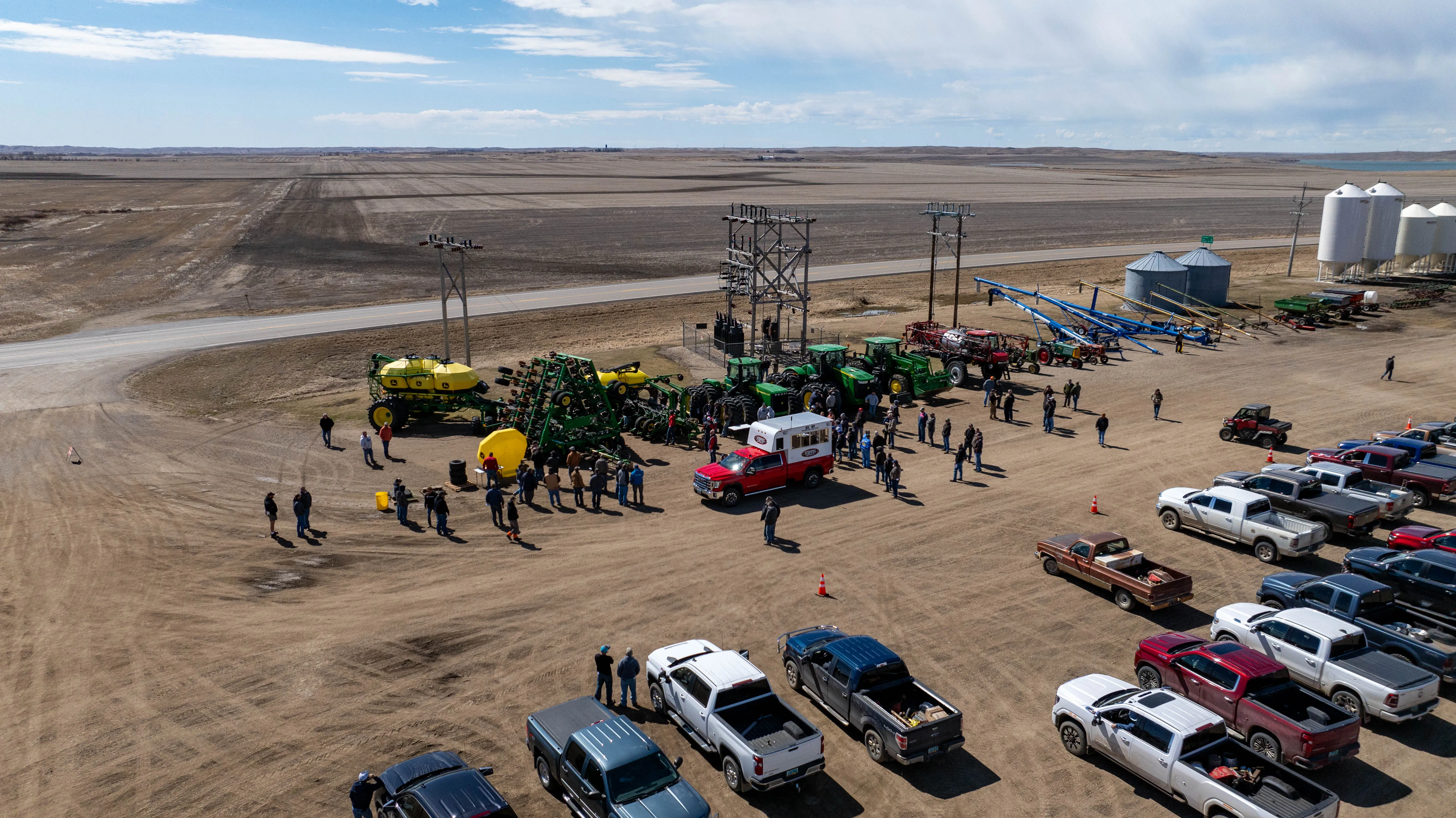
Buyers typically get a preview period to inspect a lot and ask questions before bidding opens, and many register in advance for a bidder number so they're ready to go once the sale starts. Once bidding opens, whether at a live event or during a set online window, buyers compete until the lot closes and the hammer price is set. Winning bidders are invoiced for that price plus the buyer's premium, and load-out, picking up or trucking the equipment out, happens according to the sale terms, usually within a set number of days. After the dust settles, you get a settlement statement showing what sold, for how much, what was deducted for commission, and your net proceeds, so you know exactly where things landed.
What Mistakes Should Contractors Avoid When Selling at Auction?
Most of the costly mistakes happen before the sale even starts, not during it.
Waiting too long is probably the most common one. Equipment that sits unused doesn't just fail to earn money. It actively loses value the longer it sits, especially if it's exposed to weather or going without regular maintenance. If a machine isn't working for you anymore, that's often the signal to start the conversation with an auctioneer, not a reason to put it off.
Skipping documentation is another. Buyers pay less, and hesitate more, on a lot they can't verify. If you don't have maintenance records or can't speak to a machine's history, expect that to show up in the bidding.
Some contractors also go in without researching what similar equipment has actually been selling for, which sets expectations that don't match the market. And some skip basic cleanup, letting mechanically sound equipment look worse than it is, which costs more in lost bids than the cleanup would have cost in time.
Finally, picking a sale that doesn't fit the equipment, a generic listing that doesn't reach buyers actively shopping for that category, can mean fewer bidders and a lower hammer price than the same machine would bring in front of the right audience. Asking how an auction house plans to market your specific lots is a fair question, and a good auctioneer will have a real answer.
Start With a Conversation
You don't need to have every detail figured out before you make the first call. A good auctioneer will help you decide what to sell, when to list it, and which format makes sense for your equipment and your timeline.
If you've got a single machine or an entire fleet you're ready to sell, reach out to a Steffes representative to talk through your options. And if the proceeds are going toward your next piece of equipment, Steffes Finance can help you look at financing for what comes next. We've been in the auction business since 1960, and we're glad to help you figure out the next step.