How Is Equipment Marketed Before an Auction? What Sellers Should Expect
Most people think an auction starts when the bidding opens. In reality, the work that decides how your sale goes happens weeks earlier, usually at a kitchen table or in a shop office. That’s when we sit down with you, look at what you’re selling, and figure out who needs to see it.
If you’ve never sold equipment at auction, the list of tasks can feel long. You’ll gather service records, clean up machines, confirm serial numbers and hours, review photos, and pick a sale format. None of it is complicated, but it goes better when you know what’s coming.
Our goal in marketing your equipment is simple. We want qualified buyers to understand exactly what they’re bidding on. That’s true whether it’s one loader near West Fargo, a full farm line outside Litchfield, a contractor’s fleet in the Sioux Falls area, or a yard full of equipment in Iowa.
Here’s how the process works and where you can help.
What auction format is best for selling equipment?
It depends on how much you’re selling, how soon you need it gone, and who’s likely to buy it. Most sellers end up in a stand-alone auction, a timed online auction, or one of our scheduled online sales. Your representative will help you sort out which one fits.
Why you’re selling matters, too. A farmer retiring after forty years has different needs than a contractor thinning out a few excavators or a family settling an estate. A full farm retirement line might call for a stand-alone sale with a preview day. A single specialized attachment probably doesn’t.
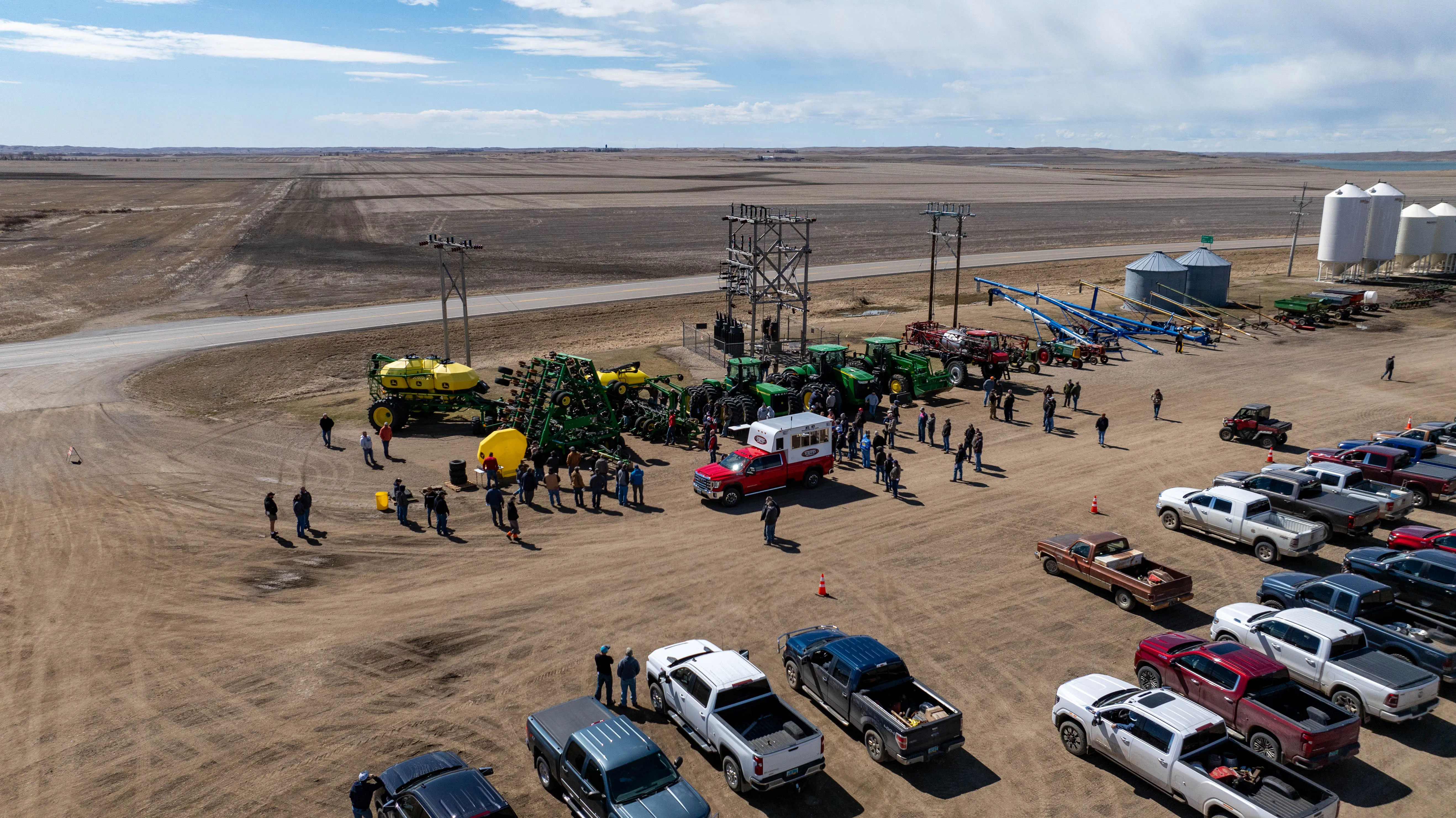
A stand-alone auction is built around one owner’s equipment. It can run live onsite with online bidding, or entirely online. Timed online auctions keep bidding open for a set window, which works well for buyers who are evaluating from a distance.
If you only have a piece or two, take a look at our bi-weekly Steffes Online Auctions. They run every two weeks, so you don’t have to wait for a big sale to come around.
Before anything gets listed, ask the practical questions. When will the listing be built? Will there be a preview? What do we need for titled assets? How will load-out work? Getting those answers early gives the marketing room to do its job.
What information do buyers need in an equipment auction listing?
Buyers want the make, model, year, serial number, and hours. They also want to know what options it has, what shape it’s in, and how it’s been maintained. A serious bidder is trying to answer a few basic questions: What is this? What comes with it? How hard was it run? Is there paperwork to back that up?
You can save everyone time by pulling this together before we build the listing. That means manuals, service and repair records, warranty paperwork, and title documents or lien releases where they apply.
Details change what a machine is worth. A tractor with guidance, newer tires, and a loader isn’t the same as the same model without them, and buyers will notice if the listing doesn’t say so.
Be upfront about problems, too. If there’s a leak, a warning light, a worn part, or a repair that never got finished, put it in the description. We’ve seen it many times: buyers who know about an issue going in will still bid. Buyers who discover it at inspection often walk away.
Your story belongs in the listing as well. Steffes listings can include an Auctioneer’s Note and seller details, so a buyer three states away knows something about the operation the equipment came from.
How should I prepare equipment for auction?
Clean it, gather the records, take care of small problems that get in the way of an inspection, and check with us before you sink money into bigger repairs. You don’t need to make an older machine look new. Normal wear is expected.
What helps is clearing out the cab and getting rid of loose tools and personal items. Wash off enough dirt, grease, and chaff that a buyer can actually see the machine. A dead battery or a flat tire seems minor, but it can make a buyer wonder what else is wrong.
Paperwork carries more weight than many sellers expect. Maintenance logs, invoices, and records of major work tell buyers how a machine was treated. If you’re planning to sell construction equipment, a solid service history can matter as much as the hour meter.
As for repairs, some pay for themselves and some don’t. Talk to your representative before you schedule a big one. They know what buyers in your category are looking for and can tell you whether the money is likely to come back on sale day.
What happens when equipment is cataloged for auction?
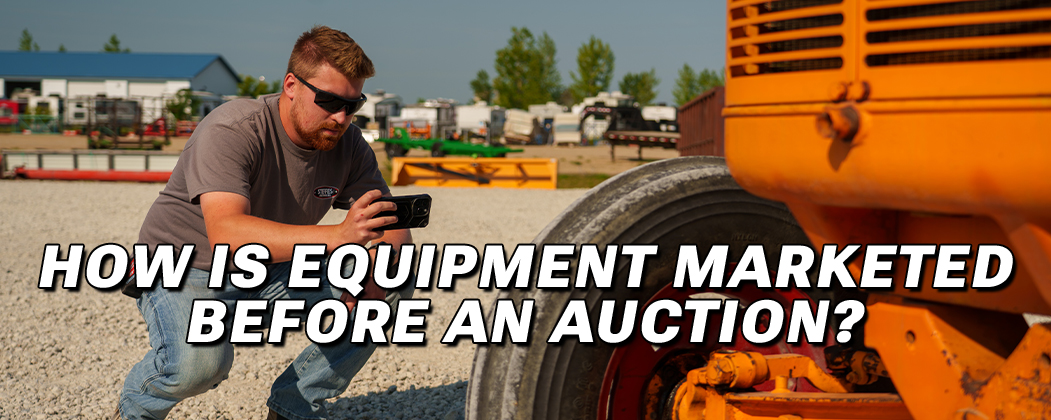
Cataloging is where your information becomes an actual listing. A Steffes team member photographs each piece and writes up the specifications and condition notes. For some equipment, we’ll add video so remote buyers can see and hear it run.
When the draft is ready, read it closely. Double-check the hours, the serial number, and the list of options and attachments. If something shows up in a photo but isn’t part of the sale, we need to know. The same goes for the reverse: if a spare monitor, a set of duals, or a stack of service records goes with the machine, make sure it’s listed.
Remember who’s reading. A buyer in Kansas or Saskatchewan can’t stop by your shop to ask questions. The listing has to answer them.
How does Steffes market equipment to buyers before an auction?
We build a marketing plan around your equipment and the people most likely to buy it. Depending on what you’re selling, that can include digital and social ads, search, email to bidders who follow that category, direct mail, and online listings with professional photos and video. A combine and a fleet of dump trucks won’t get the same plan, because they don’t have the same buyers.
You probably know the people who buy equipment in your area. Online bidding lets us reach the ones you don’t. Our representatives know local markets across the Midwest, the Rocky Mountain region, and Canada, and our bidding platform puts your listing in front of buyers across North America and often overseas.
That reach matters most for equipment with a small local market. A specialized planter or a low-hour excavator might draw its best bid from someone who lives hundreds of miles away and would never have seen a newspaper ad.
What happens on auction day and after the sale?
Buyers inspect, bidders compete live or online, and afterward you get a settlement statement showing what sold, the prices, any fees, and your net proceeds.
Before bidding opens, buyers need time to look things over and ask questions. Larger onsite sales often have a preview period. With timed online sales, the photos and condition notes do most of that work, which is one more reason to get them right. Confirm the preview dates and your responsibilities with your representative before the listing goes live.
A complete listing also makes things easier for our team. When buyers call with questions, we can spend that time answering them instead of fixing gaps we could have caught earlier.
Once bidding starts, the outcome depends on your equipment and on who shows up to bid. In a live sale, bidding happens onsite with online participation. In a timed sale, it closes when the posted window ends.
After the sale, we handle the paperwork and administration. Buyers follow the payment and load-out terms, and you get a clear accounting of how it all came out.
Pre-auction checklist for equipment sellers
-
Equipment is clean, accessible, and ready to photograph and inspect
-
Make, model, serial number, hours, options, attachments, and manuals are gathered
-
Service records, repair history, title information, and lien releases are on hand
-
Known condition issues are written down
-
You know what is and isn’t included with each lot
-
You understand the sale format, timeline, preview, terms, fees, and load-out plan
Why sell equipment with Steffes Auctioneers?
Steffes has been family-owned since 1960, and the third generation is running it now. We don’t answer to outside shareholders. The person you’re working with has the authority to make decisions that are in your interest.
We also don’t expect you to handle every phone call and pickup on your own. Our representatives work out of locations in North Dakota, South Dakota, Minnesota, Iowa, Colorado, Kansas, and Saskatchewan. They specialize in agriculture, construction, transportation, and real estate. Whether your equipment is in West Fargo, central Minnesota, the Sioux Falls region, or an Iowa contractor’s yard, there’s someone nearby who knows that market.
You bring honest information about what you’re selling. We’ll turn it into a listing and a plan that gets the right buyers to show up.
If you’re thinking about selling farm, construction, transportation, or other equipment, start with a conversation. Learn more about selling with Steffes.
Equipment auction FAQs for sellers
How far ahead should I plan an equipment auction?
Earlier than you think. The right lead time depends on the format, how much you’re selling, what records you have, and the marketing schedule. Starting early gives you time to prepare and lets us match you with the right sale.
Can I sell a single piece of equipment at auction?
Yes. Our bi-weekly Steffes Online Auctions are set up for exactly that. You get the same listing process and buyer reach as a larger sale.
Do I have to market my equipment myself?
No. You give us accurate records, condition information, and access for photos. We build the listing and handle the marketing and bidders.
Should I repair equipment before an auction?
Fix the small things that make a machine hard to inspect or run. For anything bigger, talk to your representative first. Either way, disclose what you know. Buyers appreciate honesty more than a fresh coat of paint.
Can out-of-state buyers bid on my equipment?
Yes. Online bidding opens your sale to buyers well beyond your area. Inspection and load-out details depend on the auction terms and where the equipment is located.