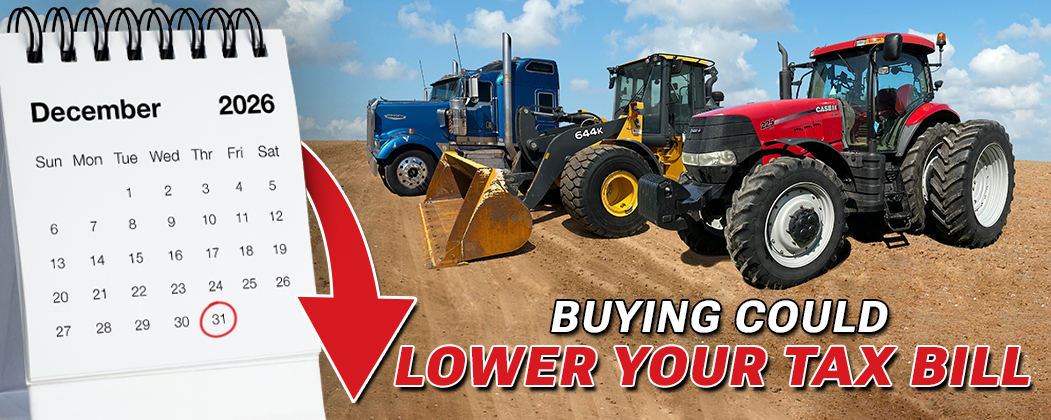
For a lot of contractors and operators, the answer is yes. Under current tax rules, equipment you buy and put to work this year can often be written off in full on this year's taxes. After a good year, that can mean a smaller tax bill and more cash left in the business. But the timing has to be right, and the machine has to earn its keep. Here's how it works.
Can you write off the full cost of equipment in the first year?
In many cases, yes. Normally, you can't write off the whole cost of an excavator, loader, or truck tractor in one shot. You depreciate it, taking a piece of the cost each year over several years. Two tax rules let you skip the wait and take the full write-off now.
Section 179. For 2026, you can write off up to $2,560,000 of equipment you buy and put into service this year. If your total equipment spend for the year goes over $4,090,000, that cap starts to shrink. These numbers come from the One Big Beautiful Bill Act, the federal tax law passed in July 2025. It more than doubled the old limits, made them permanent, and ties them to inflation going forward. The catch: your Section 179 deduction can't be more than your business's profit for the year. Your tax preparer claims it on IRS Form 4562.
100% bonus depreciation. The same law brought back 100% bonus depreciation for good, on equipment bought after January 19, 2025. Before that, bonus depreciation was getting cut back every year and was on its way out. It has no dollar cap and isn't tied to your profit. If it puts you in the red for the year, that loss can carry forward and lower your taxes down the road. It kicks in automatically unless you opt out.
Most CPAs use both. Section 179 goes first, and bonus depreciation picks up the rest. For most small and mid-sized businesses, the bottom line is simple: equipment bought and put to work in 2026 can be written off in full on your 2026 return.
Does used equipment qualify for Section 179?
Yes. A lot of buyers don't realize this, but the machine doesn't have to be new. A used excavator, dozer, motor grader, or service truck can qualify. It just has to be new to you. Generally, that means you haven't run it before, and you didn't buy it from a family member or a company you control.
That's why auctions make sense for year-end buying. You're buying from an unrelated seller, and the bidding sets the price. You can often find low-hour, one-owner machines with service records for well under the price of new. And a lower price still gets the same full write-off.
When does equipment need to be in service to count for 2026?
To count on your 2026 taxes, the machine has to be "placed in service" by December 31, 2026. Writing the check isn't enough. It has to be ready and available to go to work for you. If you win a loader on December 30 and it's still sitting on the seller's yard in January, it may not count for this year.
The closer you get to year-end, the more the details matter. Before you bid, think through:
-
Settling up. Know the auction's payment terms and buyer's premium, and get your financing lined up before sale day. Financed equipment still qualifies.
-
Load-out and hauling. Know the pickup deadline and line up a lowboy or hauler early. Winter weather and holiday schedules can slow things down.
-
Getting it job-ready. If it needs service, undercarriage work, or parts before it can run, build in time for that.
Your best bet is to start shopping in the fall, not the last week of December. That way you're picking the right machine, not just the one that's left.
Should you buy equipment just for the tax write-off?
No. A write-off saves you part of the price, not all of it. Say you buy a $180,000 excavator and your income is taxed at 24%. The write-off could save you about $43,000 in federal income tax. That's real money, but you still spent $180,000. Buy the machine because the work is there for it. The tax savings are a bonus.
A few other things to keep in mind:
-
You only get the write-off once. Take it all now, and you won't have depreciation on that machine in later years. If you expect bigger years ahead, spreading it out may help you more.
-
It catches up with you when you sell. When you sell or trade the machine down the road, much of what you get for it is usually taxed as regular income. This is called depreciation recapture.
-
Your state may play by different rules. Some states don't fully follow the federal rules, so your state return may look different.
None of this means you should pass it up. It just means you should sit down with your CPA before you bid, so the timing works this year and down the road.
Why buy your next machine at a Steffes auction?
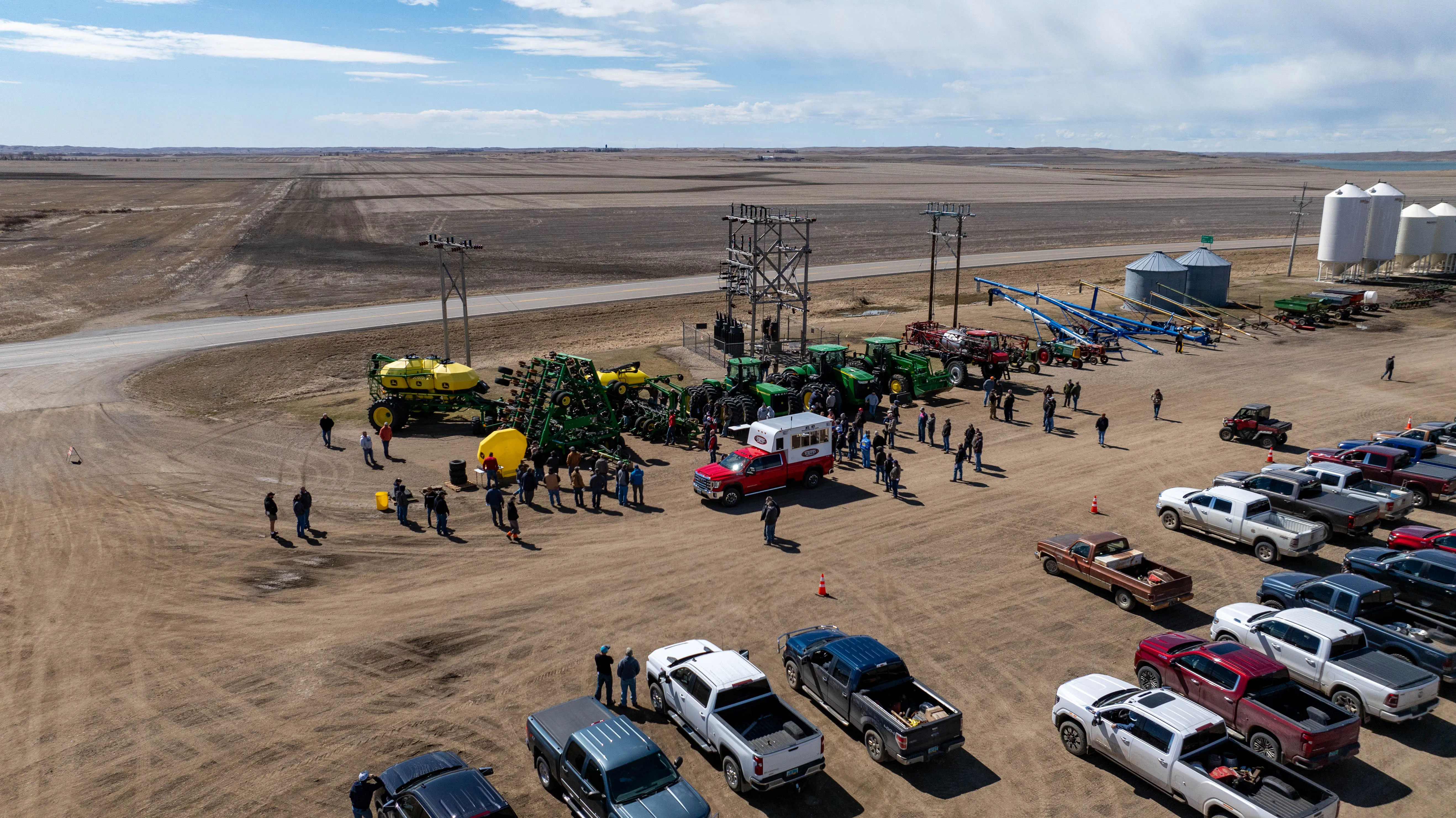
If there's a machine on your list for next season, now's the time to start looking. Steffes has been running auctions since 1960. With online bidding, you can bid from just about anywhere, whether that's a job site outside Las Vegas, a shop in western Kansas, or just down the road from our team in central Colorado.
Our construction and transportation auctions run everything from excavators and loaders to trucks, trailers, and oilfield equipment, with sellers and bidders from across the U.S. and Canada, including Alberta's oil patch.
Take a look at our upcoming auctions, or give our team a call. We'll walk you through bidding, settlement, and load-out, so your new machine is ready to go to work before December 31.
This article is for general information only. It isn't tax or legal advice. Tax numbers are based on U.S. federal rules for 2026, as of October 2026. Canadian buyers follow different rules. Every operation is different, so talk with your CPA or tax advisor before you buy.

.webp)
.webp)
