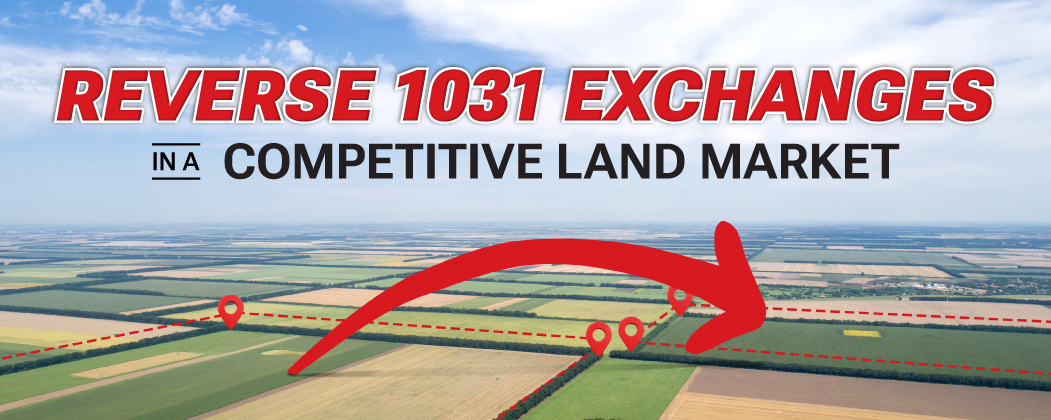
In today's competitive land market, waiting isn't always an option.
Whether you're expanding a farming operation, adding investment property, or purchasing recreational land, the right property can sell quickly. At the same time, many buyers rely on the proceeds from selling another property to complete the purchase.
This is where a reverse 1031 exchange can provide a significant advantage.
Instead of selling first and buying later, a reverse exchange allows qualified buyers to purchase a replacement property before selling their existing one, helping them preserve tax-deferred benefits while securing an opportunity that may not come around again.
At Steffes, we've worked with buyers, sellers, lenders, and qualified intermediaries across thousands of real estate transactions. While every situation is different, understanding when a reverse exchange may make sense can help you move more confidently in a fast-moving market.
What Is a Reverse 1031 Exchange?
A reverse exchange is a variation of a traditional Section 1031 like-kind exchange.
In a traditional exchange:
-
Sell your current investment property.
-
Identify replacement property within 45 days.
-
Close on the replacement property within 180 days.
A reverse exchange flips that order:
-
Purchase the replacement property first.
-
Sell the relinquished property afterward.
-
Complete the exchange within IRS timelines.
Because the IRS does not allow an investor to own both properties during the exchange process in the usual manner, a qualified intermediary and an Exchange Accommodation Titleholder (EAT) temporarily hold title to one of the properties until the transaction is complete.
Reverse exchanges are more complex than traditional exchanges, but they can be extremely valuable when timing matters.
When Does a Reverse Exchange Make Sense?
The Right Property Becomes Available
High-quality farmland, ranchland, recreational property, and development land often receive significant buyer interest.
If you've found a property that fits your long-term goals, waiting until your current property sells could mean losing the opportunity.
A reverse exchange allows you to secure the replacement property while still preserving the ability to defer capital gains taxes if the exchange requirements are met.
Inventory Is Limited
In many agricultural and rural markets, desirable land doesn't become available often. Some properties may only come to market once in a generation.
When inventory is tight, buyers frequently decide it's worth pursuing a reverse exchange rather than hoping a similar opportunity appears later.
Your Existing Property Hasn't Sold Yet
Sometimes your current property is actively marketed but hasn't closed. Rather than missing an opportunity, a reverse exchange may allow you to purchase first while continuing to market the existing property. This can provide additional flexibility without abandoning your tax strategy.
Competitive Auctions Require Fast Decisions
Many land purchases occur through competitive auctions. Auction timelines typically don't allow buyers to delay closing until another property sells.
If you've identified a property that fits your investment or operational goals, a reverse exchange may provide the flexibility needed to participate confidently.
Interest Rates or Market Conditions Favor Buying Now
Sometimes financing conditions, lease opportunities, or anticipated market appreciation make purchasing immediately more attractive.
Rather than waiting several months for another property to sell, buyers may determine that securing today's opportunity outweighs the additional complexity of a reverse exchange.
Advantages of a Reverse Exchange
A reverse exchange may provide several benefits:
-
Secure desirable property before someone else purchases it
-
Continue deferring capital gains taxes through a properly structured 1031 exchange
-
Reduce pressure to rush the sale of your current property
-
Provide flexibility during competitive market conditions
-
Better align transaction timing with long-term investment goals
Things to Consider
Reverse exchanges are not appropriate for every transaction. Because you're purchasing first, you'll typically need:
-
Access to financing or sufficient cash
-
An experienced qualified intermediary
-
Legal and tax advisors familiar with reverse exchanges
-
Careful planning to meet IRS requirements and deadlines
The additional coordination makes early planning especially important.
How Steffes Can Help
While Steffes does not provide legal or tax advice, our team regularly works alongside qualified intermediaries, attorneys, lenders, accountants, and other professionals involved in 1031 exchanges.
Whether you're buying or selling farmland, ranchland, agricultural assets, or investment real estate, we understand the timelines and transaction complexities that often accompany exchange strategies.
Our goal is to help buyers and sellers navigate the process efficiently while maximizing market exposure and connecting the right properties with the right buyers.
Don't Let Timing Cause You to Miss the Right Opportunity
In today's land market, exceptional properties often don't wait.
If you're considering buying before selling, a reverse 1031 exchange may provide the flexibility needed to secure the right property while maintaining your long-term investment strategy.
The earlier you begin planning, the more options you'll have.
Talk with the Steffes real estate team early in the process, and involve your qualified intermediary, CPA, and legal advisor to determine whether a reverse exchange is the right fit for your goals.