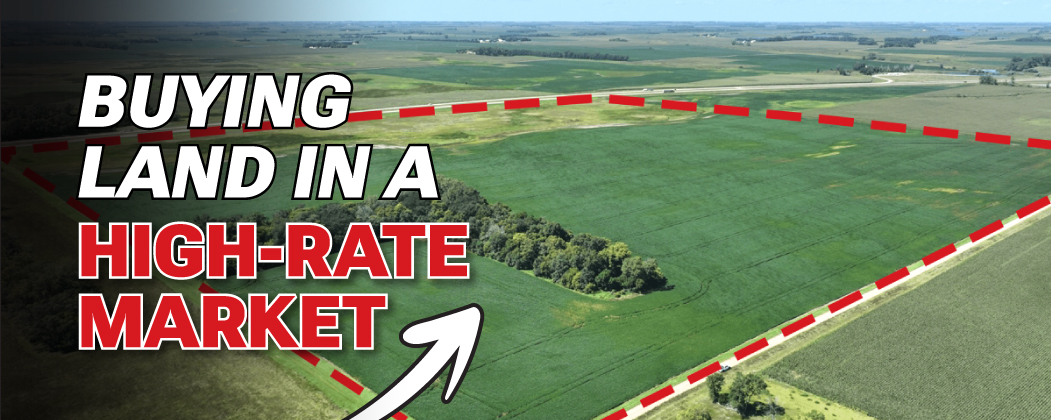
Interest rates have become one of the biggest talking points in today's real estate and agricultural markets. Whether you're purchasing your first farm, expanding your operation, or investing in recreational or development land, borrowing costs have changed dramatically over the past few years. Yet despite higher financing costs, quality land continues to sell—and often sells well.
So what does that tell us?
The relationship between interest rates and land values is more nuanced than many people assume. At Steffes Group, we work with land buyers across the Midwest every day. Here's what we're seeing in today's market and what buyers should consider before making a purchase.
How Do Interest Rates Affect Land Buyers?
Interest rates primarily affect one thing: purchasing power. As rates increase:
-
Monthly loan payments become higher.
-
Buyers may qualify for smaller loans.
-
The overall cost of financing land increases.
For buyers relying heavily on financing, that often means adjusting budgets or becoming more selective about the properties they pursue. However, interest rates are only one factor influencing land values.
Why Good Land Continues to Command Strong Prices
One misconception is that higher interest rates automatically cause farmland prices to decline. In reality, several factors continue to support strong demand:
-
Limited supply of quality farmland
-
Strong long-term appreciation potential
-
Agricultural income opportunities
-
Recreational demand
-
Investors seeking hard assets during uncertain economic periods
Well-located, highly productive land remains a scarce asset. When premium tracts become available, buyers often recognize they may not have another opportunity for years. That's why many high-quality land auctions continue to attract competitive bidding despite elevated borrowing costs.
Cash Buyers Have Become More Competitive
Higher interest rates have also shifted buyer dynamics. Cash buyers often have an advantage because they can:
-
Close more quickly
-
Avoid financing contingencies
-
Reduce transaction complexity
-
Remain unaffected by borrowing costs
This doesn't mean financed buyers can't compete—it simply means preparation matters more than ever. Having financing secured before bidding allows buyers to move confidently when the right property becomes available.
Buyers Are Becoming More Selective
Today's buyers are spending more time evaluating each opportunity.
They're asking questions like:
-
What is the property's income potential?
-
Does the soil quality justify the asking price?
-
What improvements will be needed?
-
How does this parcel fit into my long-term goals?
Rather than slowing the market entirely, higher interest rates have encouraged buyers to become more disciplined. Properties with strong fundamentals continue to perform well.
Why Timing the Market Can Be Risky
One question we hear frequently is: "Should I wait until interest rates come down?"
The honest answer is: no one knows exactly when rates will change. Waiting could mean:
-
Missing an ideal property
-
Facing more buyer competition if rates decline
-
Paying more if land values continue appreciating
Interest rates fluctuate over time. Land opportunities don't always come back.
For buyers focused on long-term ownership, finding the right property often matters more than trying to perfectly time financing markets.
Remember, while land only comes up for sale occasionally, interest rates can always be refinanced if market conditions improve.
Financing Strategies Buyers Should Consider
Every buyer's situation is different, but today's market rewards preparation. Before attending an auction or purchasing land, buyers should:
-
Meet with their lender early.
-
Understand borrowing capacity.
-
Lock financing when appropriate.
-
Build realistic payment scenarios.
-
Consider long-term ownership goals instead of short-term rate movements.
Having a financial plan allows buyers to make confident decisions instead of emotional ones.
What We're Seeing at Steffes Group
Across the markets we serve, one trend remains consistent: Quality land continues to attract serious buyers. While higher interest rates have influenced financing decisions, they have not eliminated demand. Buyers remain active because they recognize that productive farmland and desirable land assets are long-term investments with lasting value. Every property is different, every market is local, and every buyer has unique objectives. Understanding those dynamics—and having experienced professionals guide the process—can make all the difference.
Frequently Asked Questions
Do higher interest rates lower farmland prices?
Not necessarily. While higher borrowing costs can reduce purchasing power, farmland values are also influenced by supply, demand, commodity prices, investor interest, and local market conditions.
Is now a good time to buy land?
It depends on your financial situation and long-term goals. Many buyers continue purchasing land because quality properties remain limited and may appreciate over time.
Are cash buyers more competitive?
Often, yes. Cash buyers typically have fewer contingencies and can close more quickly, making their offers attractive in competitive situations.
Should I wait for interest rates to fall before buying?
No one can accurately predict future interest rates. Waiting may reduce financing costs, but it could also mean missing desirable properties or facing increased competition if rates decline.
How can I prepare to buy land in today's market?
Work with your lender before shopping, establish your budget, understand financing options, and partner with experienced land professionals who know your local market.
Buy With Confidence
Interest rates will continue to change. Markets will continue to evolve. But one thing remains constant: quality land has long been one of the most valuable long-term investments available.
Whether you're expanding your farming operation, investing in recreational land, or purchasing acreage for future generations, understanding today's market helps you make smarter decisions.
At Steffes Group, we're committed to helping buyers navigate every step of the process with confidence, transparency, and local expertise.